
Finding Joy in Queer History
A tumultuous present which resembles the past - where is queer joy to be found?

Content Note: this post contains brief discussion of historical violence against queer individuals
I suspect I am hardly the only one, especially among my dear author friends, who is desperately anticipating the moment when we all leave 2025 in our collective rearview mirror. Not that I am especially optimistic for 2026 - although I suppose that is another matter entirely!
But I must admit, as I pen this final post for 2025, that this year has felt especially trying as a young(ish), queer American. A deepening sense of dread has permeated so much of our culture, largely the result of watching so many of my friends and queer siblings struggle to manage the onslaught of fascistic politics, resurgent hatred and contempt for our communities. These undeserved and profoundly unfair burdens have been especially acute for my trans+ siblings, Black queer people and others in our community who face intersectional marginalizations.
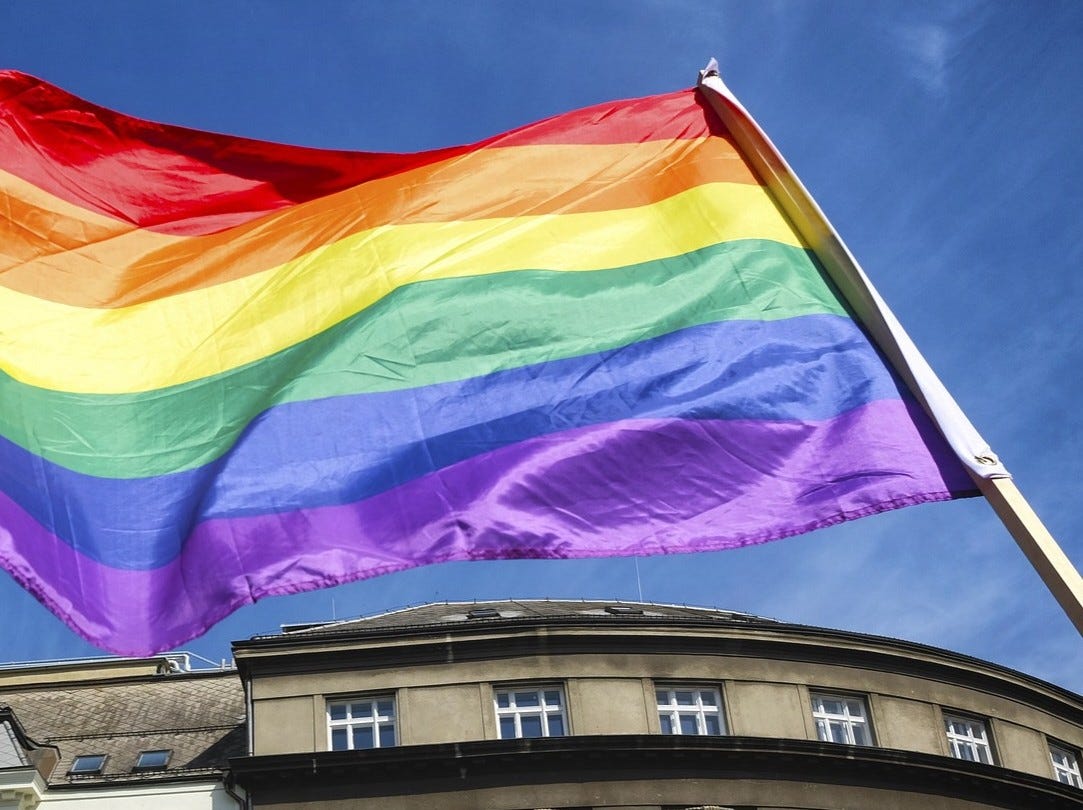
All of this leads me to reflect on my own motivations just a few short years ago when I first determined to put pen to paper (rather, fingers to laptop keyboard) and write a novel about a certain queer Queen - the very one whose story I’ve shared in two parts over the last two weeks.
When I first began writing a queer-focused Historical Fiction novel, I settled on a simple but, at least to me, critical mission statement (or, “mission-critical”, as us DC policy wonks might say). I was determined that, whenever my stories took place, whatever the norms or barriers of that particular era, my stories would always place queer joy at their narrative heart and spirit.
As a student of LGBTQIA+ history, I was driven by the importance of reflecting the beauty and resilience of the queer community throughout its long and often rocky global human story. Undeniably, suffering, fear, pain, betrayal, and horrifying violence have all been part of that lengthy tale: if you’ve followed my blog for any amount of time, you’ll already be all too familiar with some of these terrible moments.
The Justinian persecutions; the Renaissance executions; the erasure inflicted on indigenous queer and two-spirit individuals by European colonizers; “corrective” assault and abuse of queer women; slander, imprisonment and public degradation of public queer personas from Oscar Wilde to Lucy Hicks Anderson; a Lavender Scare which defined US federal policies for two decades and cost thousands of Americans their careers and livelihoods.
The list is endless. Queer historical traumas matter; they must be acknowledged and, wherever possible, repented of and restitution made.
But as I consider these painful historical truths, especially in light of our menacing present, I remember that these cannot be considered in isolation. For just as queer history is rife with tragedy, it is defined by so much more:
The beauty and brilliance of a Black, queer Harlem Renaissance which changed American culture, led by the light of figures like Gladys Bentley and Josephine Baker…
The generations of women poets proclaiming their love to one another, tokens pouring from the pens of Aphra Behn, Catherine Philips and Sappho among many more…
Scores of badass bisexuals, from Alexander the Great to my beloved Julie d’Aubigny, who lived in vibrant defiance of anyone who might attempt to contain them…
Queer warriors the world over, from the Sacred Band of ancient Thebes to the Samurai of medieval Japan, who fought for their homes, their honor, and their loves…
Philosophers, scientists, inventors scattered across the centuries - from Alexandria’s prodigal daughter Hypatia to Issac Newton to Nikola Tesla - who might have identified alongside today’s asexual and aromantic spectrums…
And millennia of transgender priests in ancient Mesopotamia and Syria who are the spiritual ancestors of the trans+ icons of our modern era…
…among many, many more.
Queer history is thus not simply a narrative of pain and loss. It is a narrative of discovery, resilience, creativity, determination, passion, agency and, to deploy the phrase Americans know very well, the pursuit of happiness.
In all of these qualities and more, there is joy. Not a joy borne of the occasional fortuitous circumstance; rather, a joy that has been nurtured from the rockiest soils and resurrected from crushed lives and broken dreams. A joy that is unyielding, and unrelenting. A joy that, as queer history so clearly explains, can never be eradicated even by the most virulent of our community’s enemies.
As I finish this short reflection, likely my last for this year, I am under no illusions. After a difficult year, plenty more strife is yet to come. Worse than what has passed so far may be on its way even now. There are no easy answers, no ready solutions which will resolve the vast, interwoven challenges that face all the members of community as we peek around the corner to scope out the fresh hell 2026 may have to offer.
But, as I look backward into the breadth and depth of the queer community’s global, multi-millennial story, I am certain that story is very, very far from over. It may be barely begun.

It is perhaps most fitting to close here with a quote from Black transgender icon and Stonewall heroine Marsha P. Johnson:
“History isn’t something you look back at and say it was inevitable. It happens because people make decisions that are sometimes very impulsive and of the moment, but those moments are cumulative realities.”
The queer community is living, writing, our own queer history every minute of every day. It is not inevitable - we do it through every thought and action. Perhaps then we can, in whatever tiny ways we might, make queer joy our shared reality.
Happy Holidays, whatever you may or may not be celebrating, and Happy New Year - I can’t wait to see you in 2026!
Love,
Andrea